

Control-tower visibility work is the data-contract and integration discipline that determines whether a control tower produces an operable signal during a real disruption or a screen full of stale events. The work begins with a current-state visibility audit across modes and partners, a supplier-and-carrier data-contract assessment, and an exception-management workflow review that surfaces the disruptions the operations team currently runs around the platform rather than through it. A senior consultant produces a target-state architecture with event-driven partner integration, a data-contract framework that defines the signal each carrier and partner must provide along with the cadence and quality expectation, an exception-management workflow that surfaces material disruptions to the operator with sufficient context to act, and an operating-model design that assigns escalation and decision rights inside the control-tower team. Deliverables include the architecture decision record, the data-contract catalog, the exception-workflow design, and a measurement framework that ties control-tower performance to disruption-recovery outcomes. Successful outcomes look like a tier-1 carrier disruption that produces an operator alert with mitigation options inside hours, a control-tower view that the COO consults during real disruption, and a partner-onboarding cadence that keeps the data-contract base current. An engagement typically runs ten to fourteen weeks, embedded with logistics operations, carrier-management, the integration platform team, and the customer-service function.
Control-tower visibility, route-optimization AI, and customs automation for transport and logistics firms.
Control-tower visibility platforms, route-optimization AI, fleet-IoT, customs and trade-compliance automation, and the multi-modal data integration that determines whether logistics decisions are real-time or retrospective.
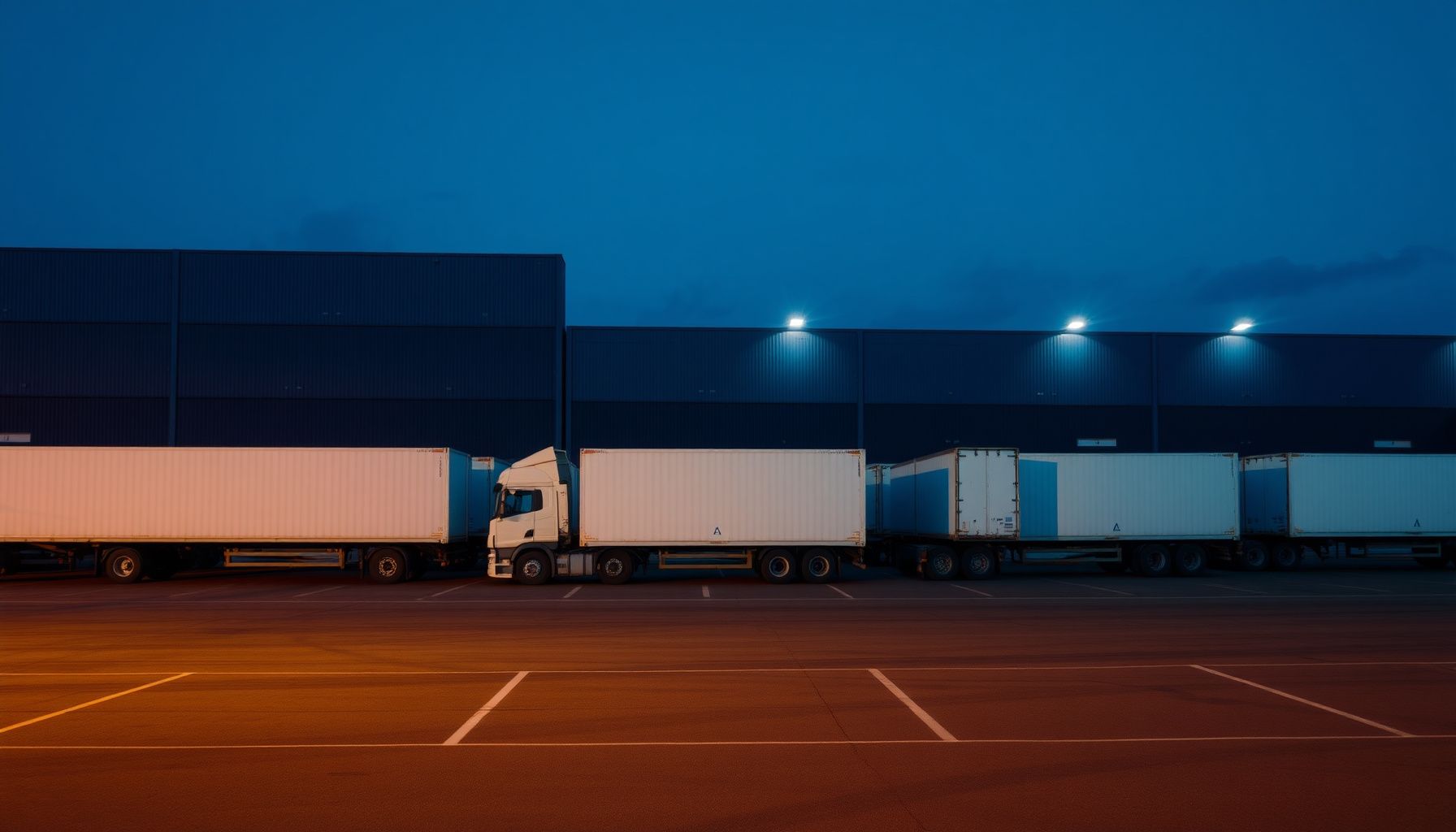
What we see in Transportation and Logistics.
Transportation and logistics is a data-integration problem disguised as an asset business. The expensive failures aren’t in the truck or the airframe; they’re in the control-tower platform that doesn’t actually see the supplier’s tier-2 inventory, the route-optimization model that was tuned on yesterday’s network and quietly stopped paying off, and the customs-and-compliance system that produces a $250,000 fine because a single HTS classification was wrong on a shipment manifest. The buyer-side reality is that real-time visibility, route economics, and compliance posture all run through the same data integration spine, and the firms that have built that spine pull ahead structurally.
We work with aviation, freight, maritime, last-mile, and rail operators on the engineering decisions where the visibility platform, the optimization layer, and the regulatory frame all have to land together. FAA, FMCSA, IMO, and IATA set the safety and operational floor. Customs frameworks (CTPAT, AEO) and IATA NDC for distribution shape the cross-border and commercial posture. DOT compliance runs through every motor-carrier and rail decision.
On AI, the realistic short-list is route optimization, ETA prediction, demand forecasting, and dock-and-yard optimization. The data-quality and integration work has to come first; without it, every model gets the same answer the planning team had in a spreadsheet, just slower and more expensively.
Where we plug in for Transportation and Logistics.
Regulatory and compliance landscape.
Transportation and logistics operators are subject to overlapping safety, customs, and operational frameworks. We design deliverables to align with the frameworks that govern the work.
-
FAA →
Federal Aviation Administration regulations governing US civil aviation operations, airworthiness, and air-traffic management.
-
FMCSA →
Federal Motor Carrier Safety Administration regulations. Hours of service, ELD mandate, and motor-carrier safety obligations.
-
IMO conventions →
International Maritime Organization conventions including SOLAS, MARPOL, and the IMO 2020 sulfur cap.
-
IATA Dangerous Goods Regulations →
International Air Transport Association DGR. The operational reference for hazmat air shipments.
-
CTPAT / AEO →
Customs-Trade Partnership Against Terrorism (US) and Authorised Economic Operator (EU). Trusted-trader programs that depend on auditable supply-chain-security evidence.
-
DOT →
US Department of Transportation regulations across modes, including hazmat (49 CFR), motor-carrier, and rail.
-
IATA NDC →
New Distribution Capability. The XML-based distribution standard that is reshaping airline retailing and indirect distribution.
Prior engagements.
Crew scheduling resilience program post operational meltdown
The Transportation and Logistics client, a major North American passenger airline, had emerged from a holiday operational meltdown under a DOT consent order with remediation milestones around crew tracking, rebooking, and the integration layer that connected them. The crew scheduling stack had cascaded under load and the rebooking engine had not converged for hours.
Barrier re-architected the crew tracking and rebooking integration layer with a queue-based pattern that absorbed back-pressure during irregular operations, rebuilt the operations control center runbook against the new behavior, and wrote the consent-order milestone evidence the DOT would accept. We rehearsed the irregular-operations response in tabletop drills with the operations control center director.
The consent order milestones closed on schedule. Eighteen-month program, embedded with the operations control center and the IT crew systems organization.
Yard and dock TMS rollout for national LTL carrier
The Transportation and Logistics client, a top-10 US LTL freight carrier, was running dock scheduling out of spreadsheets across forty service centers, with driver dwell time eating into the linehaul plan and the operations director with no system-of-record visibility into which docks were running hot. The TMS held the freight data but had no yard module wired in.
Barrier replaced the spreadsheet-driven dock scheduling with a TMS-integrated yard management system, rebuilt the dock-door-to-trailer assignment flow with the operations engineering team, and wrote the change management plan that walked dock supervisors through the new workflow. We sequenced the rollout by service center against the existing operations cadence.
Driver dwell time came down by roughly a third inside the steady-state period. Twelve-month rollout, embedded with the operations engineering function.
Last-mile route optimization for grocery delivery
The Transportation and Logistics client, a European online grocery pure-play, was running last-mile routing on a heuristic router that did not honor cold-chain constraints natively and could not respond to real-time traffic, with cost-per-drop pressure from inflationary fuel and labor costs and an on-time delivery commitment the brand could not afford to slip.
Barrier replaced the heuristic router with an OR-Tools-based optimizer wired to live traffic feeds and explicit cold-chain time-temperature constraints, rebuilt the dispatch-time-window assignment, and wrote the operations runbook for the new exception classes. We ran a parallel-run reconciliation against the legacy router for two cycles before cutover.
Cost-per-drop came down while the on-time delivery commitment stayed flat. Eight-month engagement, joint Barrier and operations research delivery, embedded with the dispatch and depot operations teams.
Ready to scope a Transportation and Logistics engagement?
A 20-minute brief on the problem and we’ll come back with what we’d actually do.