Media & Entertainment hub

Content supply chain, OTT, and ad-tech architecture for media and entertainment firms.

Content supply chain modernization, rights and royalties platforms, OTT scaling, audience-data platforms, and the AI-assisted content workflows that the next two years will be built around.
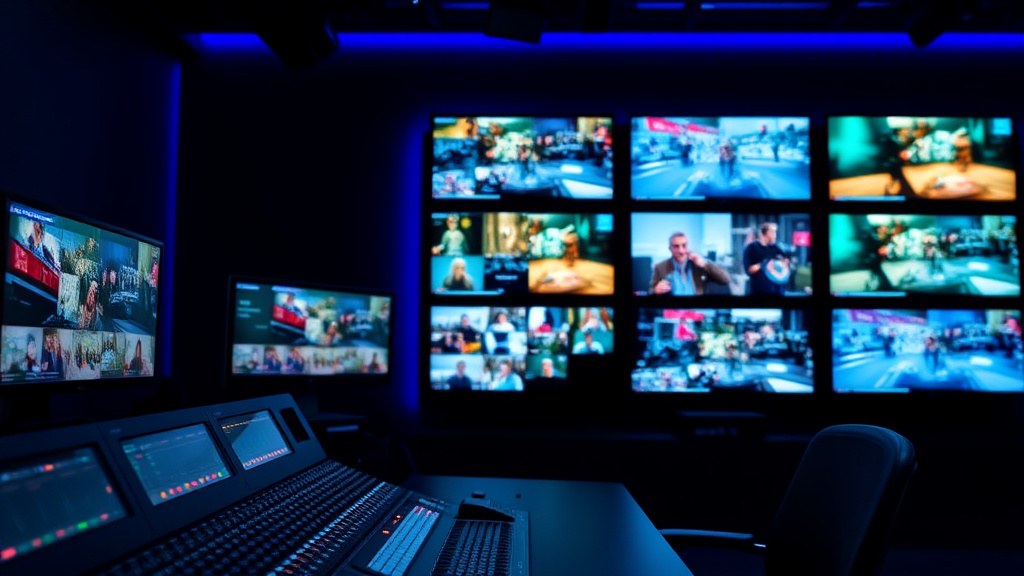
What we see in Media and Entertainment.

Media and entertainment is in a structural cost squeeze that consulting firms have largely papered over with vendor pitches. The expensive failures aren’t in the streaming codec; they’re in the content supply chain where every asset still requires manual hand-offs across six systems, the rights-and-royalties platform that can’t answer a basic per-territory question without a week of accounting work, and the ad-tech stack that lost half its identity-graph signal when third-party cookies left and nobody had the engineering to replace it.

We work with publishers, broadcasters, streaming platforms, gaming firms, and sports-media operators on the engineering decisions where the content workflow, the rights frame, and the audience-data platform all have to land together. COPPA and CARU set the floor for children’s content. FTC influencer-disclosure rules and the EU Digital Services Act govern platform liability and creator economics. General Data Protection Regulation (GDPR) and California Consumer Privacy Act (CCPA) shape the audience-data platform itself. DMCA and copyright enforcement run through every rights-management decision.

On AI, the realistic short-list is content tagging, transcription and translation, generative-asset workflows for promo and localization, and audience-segmentation work. The discipline that separates a real program from a pilot graveyard is rights clearance: the AI workflow that produces unusable output because no one cleared the training-data rights is now a recurring pattern.

Where we plug in for Media and Entertainment.

01

Content supply chain modernization

MAM and DAM consolidation, asset-lifecycle automation, and the workflow design that lets a content operation move a file through ingest, edit, QC, and distribution without manual handoffs.

Content-supply-chain modernization is the workflow-and-platform discipline of moving a content operation from manual file handoffs to an automated pipeline that ingests, edits, QCs, localizes, and distributes a master without operator intervention at each stage. The work begins with a current-state workflow audit across ingest, edit, QC, localization, and distribution, an MAM and DAM consolidation assessment, and a metadata-discipline review that surfaces the gaps slowing downstream automation. A senior consultant produces a target-state architecture spanning MAM, DAM, transcode, QC-automation, and distribution-handoff, a metadata-model decision record aligned to the company's rights and product taxonomy, a workflow-orchestration design that lets the operation reroute around outages rather than stalling, and an integration design with the rights-management and localization platforms. Deliverables include the architecture decision record, the metadata-model, the workflow-orchestration design, and a measurement framework that ties pipeline performance to per-title turnaround time. Successful outcomes look like a title moving from delivered master to distribution-ready output without manual file movement, a localization cycle compressed materially, and a content-operations team that runs the platform rather than maintaining workarounds. An engagement typically runs ten to fourteen weeks, embedded with content operations, the post-production technology team, the localization function, and the distribution-platform team.

02

Rights and royalties platforms

Rights-management replatforming, royalty-calculation engines, and the data-model discipline that lets the legal and finance teams answer a territory-level question without a week of reconciliation.

Rights-and-royalties platform work is the data-modeling discipline that lets the legal and finance teams answer a territory-and-window question on a title without a week of reconciliation across spreadsheets and source contracts. The work begins with a current-state rights-data audit, a contract-ingestion-process review, and a royalty-calculation cycle audit that surfaces the manual reconciliation absorbed by finance each period. A senior consultant produces a rights-data model that captures the dimensionality the business actually transacts on (territory, window, platform, language, exclusivity, holdback), a contract-ingestion design that uses document-AI for extraction with human-in-the-loop validation, a royalty-calculation engine architecture, and an integration design with the title-master, distribution, and finance platforms. Deliverables include the data-model decision record, the contract-ingestion operating model, the royalty-engine architecture, and a measurement framework that ties rights-and-royalties cycle time to operational and audit outcomes. Successful outcomes look like a territory-availability question answered with a query, a royalty cycle that closes on plan with audit-grade evidence, and a contract-ingestion pipeline the legal-operations team operates without engineering escalations. An engagement typically runs twelve to sixteen weeks, embedded with business and legal affairs, finance, distribution, and the rights-platform engineering team.

03

OTT and streaming infrastructure scaling

CDN strategy, encoding pipeline architecture, and the cost-and-quality discipline that determines whether streaming margins are workable at the next subscriber tier.

OTT and streaming-infrastructure scaling is the cost-and-quality-engineering discipline that determines whether streaming margins are workable as the subscriber base grows. The work begins with a CDN-strategy audit, an encoding-pipeline cost-and-quality analysis (per-title encoding, content-aware encoding, ladder design), an origin-architecture review, and a customer-experience baseline across QoE metrics (rebuffering rate, startup time, video-quality at the experienced bandwidth tier). A senior consultant produces a multi-CDN strategy with the contractual-and-operational discipline to keep it real, an encoding-pipeline architecture that optimizes the cost-and-quality tradeoff with measurable QoE outcomes, an origin-and-packaging architecture aligned to the supported-device matrix, and a measurement framework that ties infrastructure investment to QoE and cost-per-stream outcomes. Deliverables include the CDN-strategy decision record, the encoding-architecture, the QoE measurement framework, and an FinOps view that ties streaming infrastructure cost to subscriber-segment unit economics. Successful outcomes look like a CDN-failover event the customer experience absorbed without a measurable QoE excursion, a cost-per-stream reduction sustained at scale, and a streaming infrastructure that supports the next product-launch cohort without a re-architecture. An engagement typically runs ten to fourteen weeks, embedded with streaming engineering, the customer-experience function, finance, and the product-platform team.

04

Audience-data platforms

CDP and identity-graph architecture in a post-third-party-cookie world. First-party data activation, clean rooms, and the consent-and-privacy posture under GDPR and CCPA.

Audience-data-platform work in a post-third-party-cookie world is the discipline of building a first-party data foundation, an identity graph, and a clean-room and partner-activation strategy that produces measurable yield without inviting privacy enforcement. The work begins with a current-state identity audit across logged-in and authenticated touchpoints, a consent-and-privacy gap assessment under GDPR, the UK Data Protection Act, CCPA, and CPRA, and a use-case inventory across direct activations and clean-room partner activations. A senior consultant produces an identity-resolution rule set with deterministic and probabilistic tiers separated by use-case eligibility, a clean-room architecture aligned to the dominant programs (Snowflake, AWS, LiveRamp, Habu), a consent-management posture that captures purpose-of-use at the right grain, and an activation-governance framework that gates new use cases through privacy review. Deliverables include the audience-platform decision record, the identity-and-consent operating model, the clean-room integration design, and a measurement framework that ties activations to incremental revenue rather than vendor-reported lift. Successful outcomes look like a privacy-rights request fulfilled inside statutory windows without engineering heroics, an advertiser-clean-room activation that survives a privacy-office review, and a yield-and-engagement metric that improves measurably. An engagement typically runs ten to fourteen weeks, embedded with audience-strategy, marketing technology, the privacy office, and the data-platform team.

05

Ad-tech and identity-graph stack

Server-side ad insertion, supply-path optimization, and the identity-resolution work that keeps yield from collapsing when the consumer-side identity signal degrades.

Ad-tech and identity-graph work is the architecture-and-yield discipline that protects ad revenue when consumer-side identity signals degrade and platform changes (App Tracking Transparency, third-party-cookie deprecation, Privacy Sandbox) propagate through the supply chain. The work begins with a current-state ad-tech inventory across SSAI, programmatic, direct, and supply-path-optimization, an identity-graph audit, a yield baseline by inventory class, and a regulatory-exposure assessment under GDPR, CCPA, and the COPPA expectations where relevant. A senior consultant produces an SSAI architecture decision record, a supply-path-optimization design that consolidates demand paths without sacrificing yield, an identity-graph strategy that combines authenticated, contextual, and cohort-based signals appropriate to each inventory class, and a measurement framework that distinguishes yield from price-discrimination. Deliverables include the architecture decision record, the supply-path optimization plan, the identity-strategy decision record, and a yield-management operating model. Successful outcomes look like a yield-and-fill rate that holds through a major identity-signal degradation event, a supply-path consolidation that improves working-media percentage, and an ad-tech stack that the revenue-operations team can reason about rather than a vendor stack of black boxes. An engagement typically runs ten to fourteen weeks, embedded with ad-revenue operations, the ad-tech engineering team, the audience-data platform team, and the product-platform organization.

06

AI-assisted content workflows

Generative-asset workflows for promo and localization, transcription and tagging at scale, and the rights-clearance discipline that determines whether the program is usable in production.

AI-assisted content workflows for media operations cover generative-asset creation for promo and localization, transcription and tagging at scale, and the rights-clearance discipline that determines whether the program produces usable output or legal exposure. The work begins with a use-case inventory, a rights-and-licensing audit of the foundation models and training-data sources in scope, a current-state metadata-and-tagging assessment, and a localization-cycle baseline. A senior consultant produces a use-case decision record per workflow with the rights-clearance posture documented per model, a transcription-and-tagging integration design that connects to the MAM and the metadata-model, a generative-asset workflow with human-in-the-loop review and provenance tracking aligned to the C2PA Content Credentials standard, and a measurement framework that ties AI-assisted output to per-title turnaround and cost outcomes. Deliverables include the use-case decision records, the rights-clearance framework, the integration designs, and a governance operating model that spans technology, business affairs, and content operations. Successful outcomes look like a localization-cycle materially compressed, a generative-promo workflow that survives a legal review, and a metadata-discipline improvement that supports search, recommendation, and rights-management downstream. An engagement typically runs eight to twelve weeks, embedded with content operations, business and legal affairs, the localization function, and the AI-platform team.

Regulatory and compliance landscape.

Media and entertainment firms operate inside overlapping privacy, content, and platform-liability frameworks. We design deliverables to align with the frameworks that govern the work.

  • COPPA →

    Children’s Online Privacy Protection Act. FTC-enforced obligations for content directed at children under 13.

  • CARU →

    Children’s Advertising Review Unit. Self-regulatory guidelines for advertising directed at children.

  • FTC influencer rules →

    Federal Trade Commission disclosure obligations for paid endorsements and influencer marketing.

  • GDPR →

    EU General Data Protection Regulation. Lawful basis and data-subject rights for audience data and advertising activation.

  • CCPA / CPRA →

    California Consumer Privacy Act and California Privacy Rights Act. The de-facto US privacy floor.

  • DMCA →

    Digital Millennium Copyright Act. The takedown-and-safe-harbor frame that governs platform copyright liability in the US.

  • EU Digital Services Act →

    Platform liability, content-moderation, and risk-assessment obligations for online platforms operating in the EU.

Prior engagements.

Tier-1 streaming service, sports vertical
Closed studio prerequisite for the 4K HDR live tier.
Challenge

DRM and watermarking refresh for premium SVOD launch

The Media and Entertainment client, a tier-1 streaming service in the sports vertical, was launching a premium 4K HDR live tier and the studio licensing partners had set forensic watermarking and multi-DRM coverage as a prerequisite that the existing PlayReady and Widevine deployment could not meet. The launch date had been announced.

Approach

Barrier implemented session-based forensic watermarking on the origin packaging path, deployed SPEKE-driven multi-DRM across HLS and DASH manifests for FairPlay, PlayReady, and Widevine, and wrote the key rotation and revocation runbook the security operations team would carry. We rehearsed the takedown drill against pirated test feeds with the anti-piracy vendor.

Results

The studio licensing prerequisite cleared in time for the launch window. Six-month engagement embedded with the platform engineering and content protection teams.

Top-10 US news publisher, twelve owned titles
Twelve titles onto one Arc XP tenant with editorial identity intact.
Challenge

Editorial Centers for Medicare & Medicaid Services (CMS) consolidation for legacy publisher

The Media and Entertainment client, a top-10 US news publisher, was running twelve title-specific CMS instances accumulated through M&A, each with its own editorial workflow and front-end stack, and the central technology budget could no longer support twelve parallel roadmaps. The editorial leaders were protective of their brand identity.

Approach

Barrier migrated the twelve titles onto a single Arc XP tenant with a shared design system that preserved per-title identity at the front end, rebuilt the editorial workflow around a common newsroom model, and wrote the SEO migration plan against each title's existing canonical structure. We rehearsed the cutover with the editor-in-chief of the largest title before the wider rollout.

Results

Per-title editorial tooling cost came down materially while front-end identity stayed intact. Fourteen-month program, three-wave migration, embedded with the central platform team.

Top-30 mobile games publisher, casual portfolio
Pulled live-ops experiment readouts from days into hours.
Challenge

Live-ops data platform for free-to-play mobile studio

The Media and Entertainment client, a top-30 mobile games publisher, was running A/B testing for its casual portfolio off a batch Extract, Transform, Load (ETL) pipeline that could not return experiment readouts inside a live-ops cycle, with LTV models retraining nightly on stale event data. The live-ops team was making decisions without statistical confidence.

Approach

Barrier built a real-time event pipeline on Kinesis and ClickHouse with a schema registry the analytics engineers would govern, rebuilt the A/B tooling on top of streaming aggregates, and instrumented the LTV model serving layer for hourly refresh. We wrote the experimentation playbook the live-ops product manager would adopt and rehearsed the readout review with the studio's analytics lead.

Results

Experiment readouts pulled from days into hours for the live-ops team. Seven-month engagement, two-stream delivery model.

Ready to scope a Media and Entertainment engagement?

A 20-minute brief on the problem and we’ll come back with what we’d actually do.

Schedule a consultation →